Exploring the Rich Tapestry of Filipino Cuisine
Filipino cuisine is a vibrant and diverse culinary tradition that reflects the rich history and cultural diversity of the Philippines. Influenced by a myriad of cultures including Malay, Spanish, Chinese, and American, Filipino food is a delightful fusion that offers something for everyone. Let’s take a journey through some of the most iconic dishes and characteristic customs that define Filipino kitchen.
Adobo
Often considered the unofficial national dish of the Philippines, adobo is a flavorful stew made with chicken or pork marinated in vinegar, soy sauce, garlic, bay leaves, and black peppercorns. It’s then slowly simmered until tender. The result is a savory, tangy, and slightly sweet dish that is deeply comforting.
Lechon
A festive centerpiece at many Filipino celebrations, lechon is a whole roasted pig known for its crispy skin and tender meat. The pig is marinated, stuffed with spices, and roasted over an open flame for several hours, resulting in a dish that's as much a visual spectacle as it is a culinary delight.
Sinigang
This is a sour soup made with a tamarind base, often featuring pork, shrimp, or fish. It's packed with vegetables like kangkong (water spinach), radish, eggplant, and okra. Sinigang is known for its distinctive sour taste which is both refreshing and comforting.
Kare-Kare
A rich and hearty stew made with oxtail, tripe, and vegetables in a thick peanut sauce. It’s traditionally served with bagoong (fermented shrimp paste) on the side, which adds a salty and savory counterpoint to the dish’s creamy and nutty flavors.
Pancit
This term refers to a variety of noodle dishes, with Pancit Canton (stir-fried egg noodles with meat and vegetables) and Pancit Malabon (thicker rice noodles with a seafood-based sauce) being particularly popular. Each version has its unique preparation and regional twist.
Halo-Halo
A quintessential Filipino dessert, halo-halo is a colorful mix of shaved ice, evaporated milk, sweetened beans, jellies, fruits, and leche flan, topped with a scoop of ube (purple yam) ice cream. It’s a refreshing treat perfect for the tropical climate.
Bibingka and Puto Bumbong
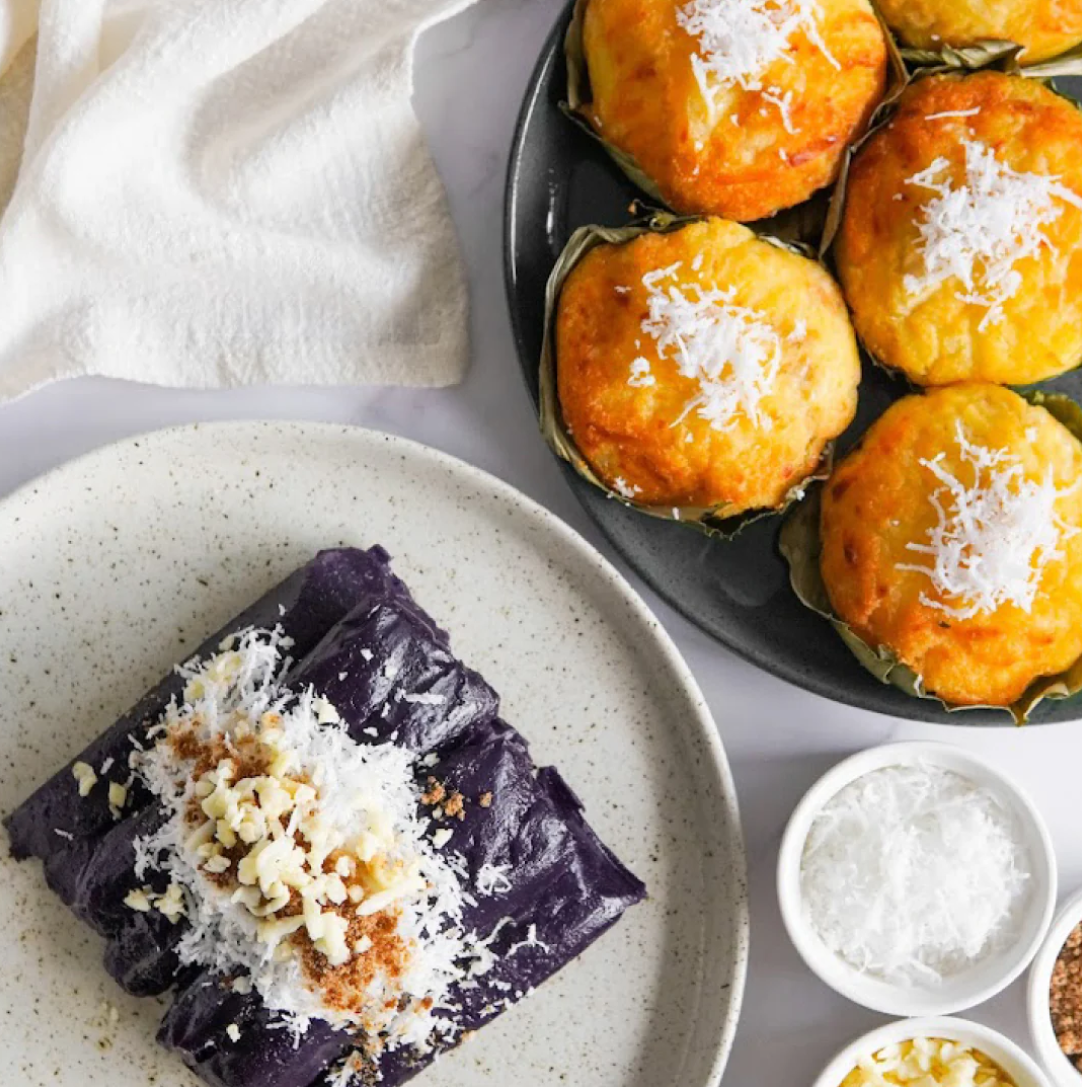
These are traditional rice cakes often enjoyed during the Christmas season. Bibingka is a spongy cake made from rice flour, coconut milk, and topped with salted egg and cheese. Puto Bumbong is a sticky purple rice cake steamed in bamboo tubes and typically served with butter, grated coconut, and brown sugar.
Kamayan
This traditional way of eating involves using your hands instead of utensils. Kamayan feasts often feature a large spread of food laid out on banana leaves, encouraging communal sharing and a more intimate dining experience.
Boodle Fight
Originating from military practices, a boodle fight is a style of eating where food is piled on a long table covered with banana leaves, and diners eat with their hands. This practice fosters camaraderie and is a fun, informal way to enjoy a meal with a group.
Fiestas and Celebrations
Filipino culture places a high value on gatherings and celebrations, and food is always at the heart of these events. From town fiestas to family gatherings, there's always an abundance of food, highlighting the importance of hospitality and sharing in Filipino society.
Merienda
This is a light meal or snack typically enjoyed in the mid-morning or afternoon. Merienda can include anything from sweet pastries like ensaymada to savory dishes like lumpiang shanghai (spring rolls). It’s a beloved tradition that provides a perfect break during the day.
 Čeština
  English